Beethoven regions join forces: ‘The first initiatives are getting off the ground’
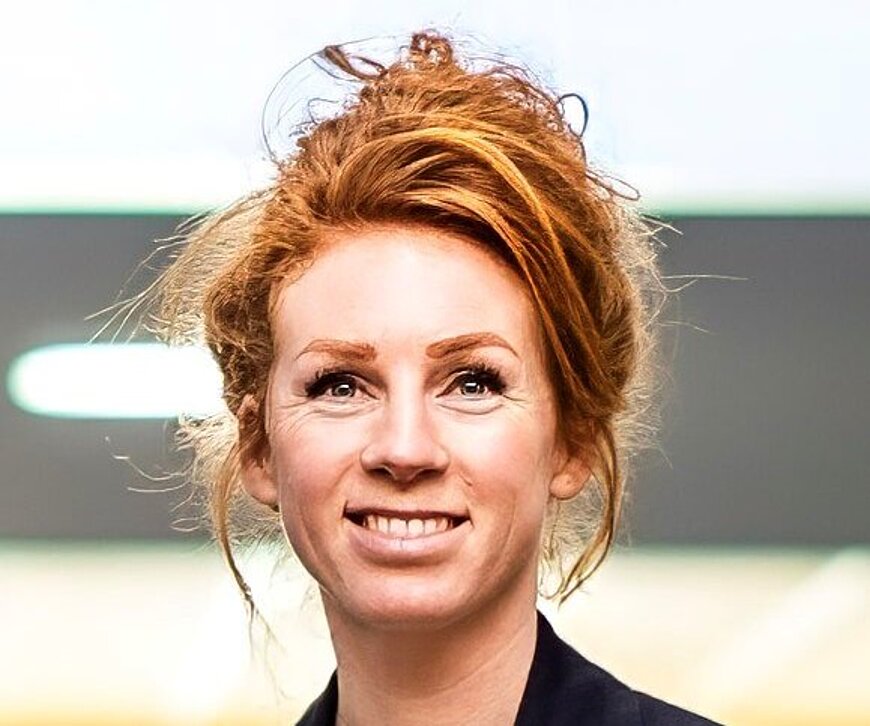
Demand for technical talent is growing rapidly, particularly in the semiconductor sector. To train and upskill more technical professionals, the Beethoven Talent Programme brings together education providers, businesses and the government. Operating across four regions, they are strengthening educational provision and recruiting students and career changers. Auke van der Wijst is regional coordinator for the Brainport region, which has a strong semiconductor cluster. ‘If things come to a standstill here, a large proportion of all innovative technological developments will grind to a halt. And not just in the Netherlands, but far beyond.’
Although technical talent is needed throughout the Netherlands, the Brainport region is where the greatest demand for labour lies. Auke: ‘Nationally, we expect that 38,000 jobs will need to be filled in the semiconductor sector over the next five years, 26,000 of which will be in the Brainport region. There are more than a hundred semiconductor companies here that need staff now or in the future.’ The Beethoven Talent Programme brings together government, education and industry to tackle this challenge together. ‘We have now got underway and the first initiatives are taking shape. It gives me energy to see all that enthusiasm.’
Innovating education
According to Auke, training is essential to fill all those jobs. ‘Together with vocational colleges, universities of applied sciences and universities, we are renewing the educational offering, trying to prevent dropouts and actually increase the number of students.’ The regional business community plays an important role in this. ‘We want to provide demand-driven training. What does the market require, and how do we respond to that within the education system? At the Ter AA vocational college in Helmond, for example, a cleanroom has recently been set up. Together with Summa, De Lis, Twente MBO and VCCN, they are now developing a standard curriculum for cleanroom training programmes. This is necessary because the demand for cleanroom staff is high in this region.’ Nevertheless, according to Auke, adjustments to mainstream education alone are not enough. ‘That is why we are also focusing on untapped and international talent. And we are trying to make Lifelong Learning as attractive as possible, for example.’
Recruiting students
Recruiting students starts as early as primary and secondary school. ‘We inspire children to pursue a future in technology and show them just how broad this sector is. We do this, for example, through the youth platform Spelbrekers, where gaming and tech come together. Young people don’t always know what the semiconductor industry entails. What do you actually make? And what happens here in the region? That becomes clear on that platform, in a way that suits the target audience.’
Collaboration between four regions
Auke shares the initiatives emerging in the Brainport region with the other three regional coordinators within the Beethoven Talent Programme: in the north of the country, South Holland and Twente. ‘We are the links between the regions. Beethoven is a national plan, so we also tackle a number of themes at national level, such as an international recruitment campaign at universities of applied sciences and research universities. And we discuss progress with one another. Which interventions work and which don’t? That way, we learn from each other and make adjustments together.’
Is all that effort really necessary? ‘Definitely,’ says Auke. ‘The role of the semiconductor sector is significant. The world around us has become dependent on chips. Whether it’s medical equipment, traffic systems, phones, tablets or toothbrushes: chips are in everything. Moreover, smart, powerful chips with high computing power are needed to solve societal challenges, such as the energy transition.
In short: chips have become indispensable in our lives. Our future lies, as it were, in the hands of the semiconductor sector.’
Curious about the story of the four regions? You can read it here.