“Brainport is the ideal region for an inclusive labour market”
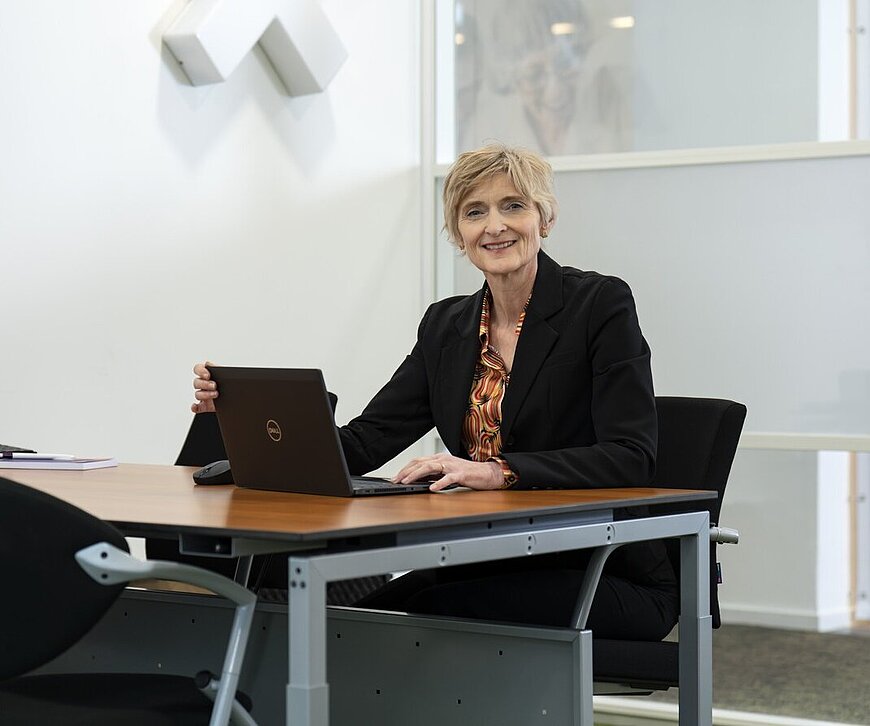
‘Work is about so much more than just earning money.’ That’s just one of the things Marion van Limpt has said. The director of Senzer, who also spent many years as the director of a regional social services agency, is a fine example of someone who looks beyond what meets the eye. ‘Work gives you an identity,’ she says. According to the native of the Kempen region, Brainport voor Elkaar offers a wonderful platform to help inclusive working in our innovative region grow into a national model.
Empowering people for whom paid work is not a given. That is what drives her. ‘How do you get these people into paid work, and how do you bring the work to these people?’ she says, immediately making it clear that her focus is on ‘paid’ work. In the Peel region, home to around a quarter of a million people, the integrated employment development agency Senzer acts as a connector and driving force behind that principle. But thanks to the close collaboration Senzer has with the other employment organisations in Brainport, Marion immediately represents the interests of all residents in the region who need a helping hand in the labour market. Marion: ‘We turn benefit dependency into work in order to develop wage-earning capacity from there. Difficult? Given the changing target group, that’s not always easy. For the people who are currently on the sidelines, there are often various issues at play. So we have to provide a bespoke approach.’
Building bridges to larger players
Marion van Limpt recently became a board member of Brainport voor Elkaar. Why? ‘Because I think we can make great strides in our region. There is a willingness to think and work inclusively. In the Peel region, you’ll find many smaller family businesses and SMEs. These are companies that naturally think more inclusively. I see it as a great challenge to build bridges from there to the larger players in the region. After all, inclusive working does require a certain effort.’ As an example, Marion cites Du Pré Groenprojecten in Helmond, where many people with a disability work. ‘They show that inclusive working isn’t something you just do “on a whim”. For instance, they train their own staff in how to deal with people who need a bit of extra support. You have to look closely, ask follow-up questions if something’s up, not judge too quickly – all that sort of thing. Above all, it demands a lot from your corporate culture. But the great thing is that if you take steps in that direction, you immediately become a much more attractive employer. If you work and think inclusively, if you reflect society, you have fewer staffing issues. And I didn’t just make that up; it’s been proven.’
Look at how work is organised
Marion van Limpt believes that, particularly in our region, something can be done about the social divide. ‘The Brainport region has a lot of clout. Because we work well together from all angles, we can achieve something wonderful here. For example, I see a major challenge in organising work differently in various places. We still focus too much on teaching skills and looking at talents and qualifications. But I would say: take a look at how the work is organised too. We have a pilot project with two healthcare organisations, in which we have, to put it bluntly, thrown the work of a large number of roles into one pot. From there, we make matches and create new roles. Which parts can people with a disability take on? How do we organise that and what is needed to make it happen? In addition, we can use technology to make work more accessible to a different target group.’
Value of untapped labour potential
Marion has many more plans. Job carving, job creation, making greater use of experiential expertise, a national pilot to see how we can move away from the misery caused by schemes such as the WIA and Wajong. ‘Above all, I think we need to start appreciating the value of our untapped labour potential. We need to realise that we can support people better than by keeping them stuck on benefits. Brainport seems to me to be an ideal breeding ground for exploring whether we can overturn entrenched systems and ways of thinking. I would very much like to contribute to that.’