Education manager Ter AA sees the challenges in the semiconductor sector primarily as an opportunity
In the coming years, a great deal of talent will be needed to fill the vacancies in the semiconductor sector in Brainport. It therefore makes sense that part of the Beethoven funds is earmarked specifically for retaining, recruiting and training talent. In a series of six stories, we take a closer look at this challenge. In episode 3, we tell the story of Ton Westerveld.
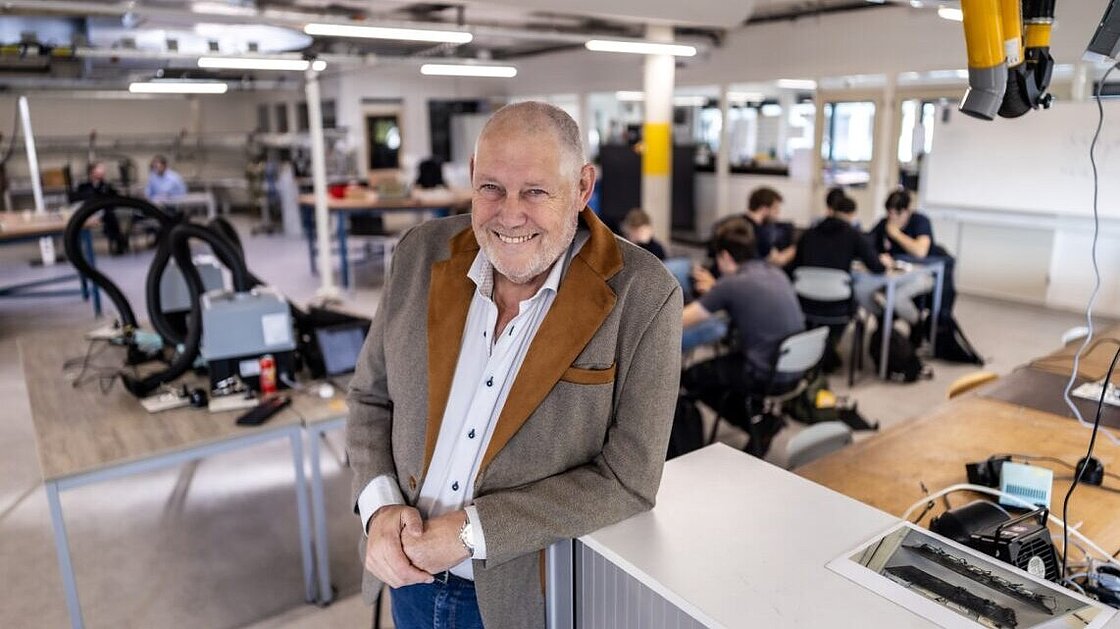
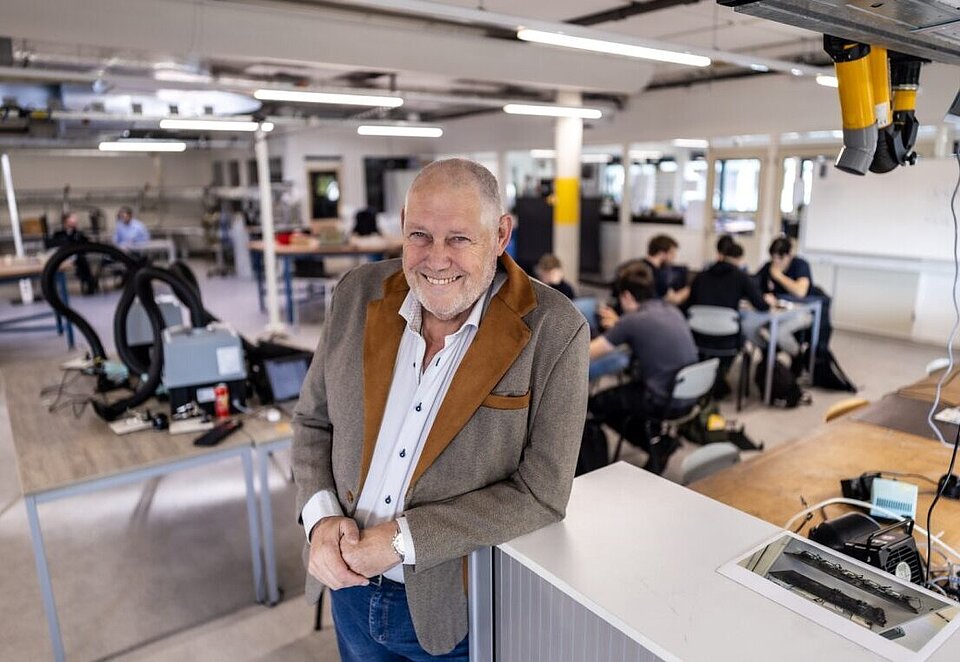
A large proportion of the growing demand for workers in the semiconductor sector must be met by vocational education (MBO). At Ter AA in Helmond, they are well aware of this. ‘But I do like a challenge. I also see it, above all, as an opportunity to tailor our education even more closely to market demand.’ So says Ton Westerveld, senior training manager at Ter AA and programme manager of the Beethoven project. He speaks enthusiastically about the steps the vocational college is currently taking to raise the profile of technical education even further, and how Ter AA aims to contribute to meeting the growing demand for skilled workers.
Ton doesn’t consider himself a traditional educator, he says. ‘But I’ve always been involved in developing people. For example, when I worked in the prison service and also at the NS. In my role as education manager at Ter AA, I’m currently focusing on questions such as: how do we ensure our education meets the needs of people in the industry? The focus is currently on companies in the semiconductor sector. ‘It gives me energy that, together, we’ve already been able to achieve so much in such a short space of time.’
There is high demand for technical talent in the semiconductor sector. And that demand is only set to increase in the coming years. ‘It’s up to me and my colleagues to find a way to produce enough professionals who are ready to start work.’ The educational institution does this by actively seeking collaboration with the business community. ‘To gain a clear understanding of the skills we need to equip our students with, but also to work together on how we can make the courses even more appealing. That way, we can increase student intake.’
Cleanroom
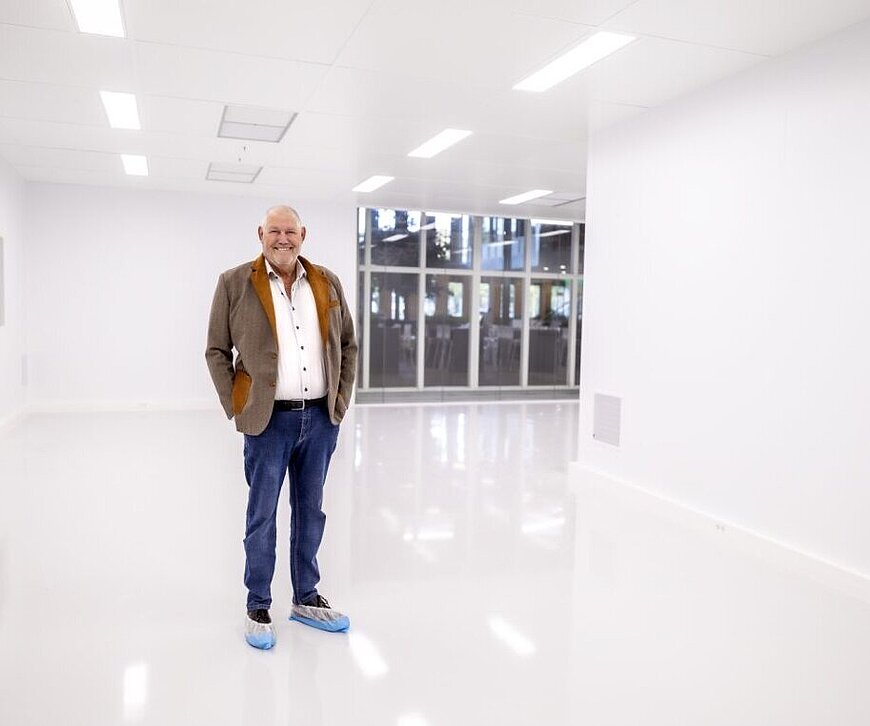
One of the issues that emerged from discussions with technical companies in the region was the need for the vocational college to have its own cleanroom. ‘Virtually all suppliers in the semiconductor sector have their own cleanrooms. Until now, they’ve had to keep part of theirs free to train our students. Having our own cleanroom would solve that problem. It also provides space to experiment with our students, as is only right in education.’ In just six months, the idea has become a reality. In mid-October, the facility was officially opened by European Commissioner Roxana Mînzatu. Ton is visibly proud of it: ‘The great thing is that, as well as students from Ter AA, other educational institutions and companies can also make use of it. For example, to try out something new without disrupting their own production process.’ There was, however, one condition: ‘Companies may use the cleanroom provided they involve our students. After all, they are their future employees.’
Choosing what you know
The programme manager hopes that, thanks to the strengthened links with regional businesses and the arrival of the cleanroom, more students will opt for a technical MBO course. ‘We’ve got some catching up to do. Nationally, one in five students opts for a technical course, whereas here in the region it’s only one in six or seven. And that’s quite remarkable, because it’s precisely here in Helmond-de Peel that you’ll find many suppliers to the semiconductor sector.’ Ton can point to several reasons for these figures. ‘At the moment, we ask children: what do you want to be when you grow up? The question is whether we should keep asking that. Because children tend to choose something they’re familiar with – a field they’ve come into contact with before. That’s not happening enough at the moment when it comes to the three largest sectors in this region: construction, healthcare and engineering.’
Link to ICT
According to Ton, the major misconception therefore lies in the association with the word ‘engineering’. ‘In secondary education, that subject is often geared towards professions such as electrician, plumber or construction worker. So we’re often fishing in the pool of people who want to work with their hands. But let’s cast our net wider, into the ICT pool, for example. Because these days, machinists are fully-fledged programmers, and the vast majority of welders need to be able to work effectively with robots. Let’s focus secondary school leavers more on programming, because those are precisely the people we need.’
Broader target group
But that can lead to difficult situations. Ton: ‘If you want to train more students for the microchip sector, that will be at the expense of other courses. Because, demographically speaking, the number of students is falling.’ That is why Ter AA focuses not only on school leavers and career changers, but also on the partners of knowledge workers (spouses) and status holders. ‘There’s still a lot of potential there. It does, however, require a different approach: you have to look at the bigger picture. If we focus on opportunities rather than limitations, I’m certain we can attract many potential employees for the sector from this international target group.’
Opportunities in the Brainport region
According to Ton, politics still has an important role to play in this regard. ‘Attracting foreign talent is a sensitive issue. And I do understand that. Take, for example, the pressure on the housing market. On the other hand, without all that international talent, we won’t be able to fill all those jobs. And let’s be honest: with a company like ASML and all those hundreds of suppliers, we’ve struck gold here in the Brainport region.’
Meanwhile, Ter AA isn’t sitting back and is taking the initiative himself. For instance, Ton is investigating whether it’s possible to introduce a dual qualification or a crossover programme for laser cutters or machinists with ICT skills. He also wants to step up collaboration with VMBO schools. ‘Pupils come to our vocational college and visit tech companies. This brings them into contact with technology and gives them a realistic picture of what the field involves these days. And it makes the semiconductor sector come more to life for this group of potential students.’