‘Retaining skilled staff is the new recruitment’
Anyone walking into a technology company today is likely to hear that it is becoming increasingly important to retain skilled professionals. At the same time, demand for new staff remains high and there is still a great deal of untapped talent out there, ready to take the next step in their careers, provided they are given the opportunity. To facilitate growth in the semiconductor sector, the Koninklijke Metaalunie, FME and Brainport Development are investing, as part of the Beethoven Talent Programme, in initiatives such as the Brainport Academy: a partnership in which businesses, the education sector and the government are working together on retraining and further training. By joining forces, supply and demand are being matched more effectively.
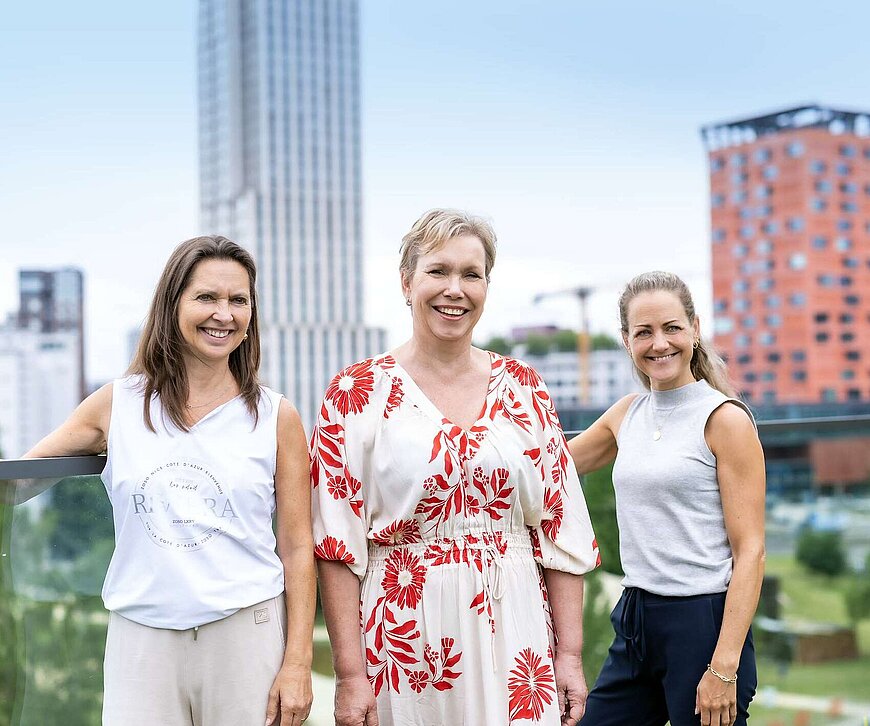
According to Anke Meuffels of the trade association Koninklijke Metaalunie and Ethel van Groenestijn of the employers’ organisation FME, it usually starts with listening. Together with their colleagues, they are in close contact with business owners struggling with staff shortages, schools keen to find out what companies need, and people considering a career move into engineering. They take these insights back to the region. ‘Companies know exactly where to find us,’ says Anke. ‘They’re facing a challenge, perhaps because they’re looking for staff or want to retrain someone. Together with our R&D funds, we help them achieve more with fewer people, for example through on-the-job training. We’re also in close contact with the education sector. By connecting these two worlds, we come up with great solutions.’
Ethel is also very familiar with this in practice. Before she joined FME, she managed a software engineering company, where vacancies would sometimes remain unfilled for months. ‘I know how frustrating that can be, constantly searching for that suitable candidate. That’s why I believe so strongly in collaboration and building on what’s already there, because so much is already happening. We don’t need to reinvent the wheel. Our role is precisely to show companies what opportunities already exist and to bring the relevant parties into contact with one another.’
Most important asset
This also places demands on companies themselves. According to Astrid van Deelen of Brainport Development, the days when organisations searched for the ‘ideal candidate’ are over. ‘The jack-of-all-trades, the ready-made expert, is almost impossible to find these days. Given demographic trends, we simply know that the workforce won’t grow naturally any longer.’ That is why she recommends investing more in your current staff. ‘Retention is the new recruitment. The skilled workers you already have, that talent, is our most important asset.’
This means that companies, too, must look beyond the perfect candidate. Someone without a technical background can sometimes prove to be a surprisingly good fit. ‘The best stories are often those of people who have taken a completely different path,’ says Anke. ‘Take someone who’s been a baker for years and eventually ends up in a metalworking company. Someone like that might never have thought that engineering would suit them, but then turns out to be completely in their element. Examples like this show just how much potential there is, if you’re prepared to look beyond the obvious. That does, however, require a solid foundation, sufficient on-the-job support and colleagues who are given the time to really help someone get started.’

First Help for Career Changers
Attracting new target groups is one challenge; ensuring they settle successfully into the workplace requires more. That is why the Brabant Technology Coalition, of which FME and Koninklijke Metaalunie are members, developed the ‘First Help for Career Changers’ (EHBO) toolkit. At first glance, it looks like an ordinary first-aid kit, complete with a red box and a white cross. Except that it doesn’t contain any bandages or plasters. ‘It contains tips for colleagues who are mentoring a new employee,’ explains Anke. ‘Someone coming from a different sector might not yet realise how valuable a machine is or how many hours of engineering go into a product. That’s not a problem at all, but you do need to guide people through it patiently. With the tips in the first-aid kit, we help current colleagues to give new employees a warm welcome and show them the ropes within the company, step by step.’ According to Ethel, this example shows that a successful transition is never just about the new employee. ‘We often focus on the person joining us, whilst colleagues on the shop floor are just as important. If they’re given the time and tools to train new colleagues, this increases the chances of a smooth induction process and prevents extra workload.’
From isolated links to a single network
This way of working together doesn’t stop at individual companies. Through initiatives such as Techniekcoalitie Brabant, Klik op Morgen, the national ‘Techniek’ action plan and Brainport Industries College, FME and Koninklijke Metaalunie actively bring entrepreneurs into contact with schools, so that companies can contribute ideas on training programmes at an earlier stage and students enter the labour market better prepared.
‘We’re not starting from scratch,’ emphasises Astrid. ‘There are already many good initiatives underway. With funding from the Beethoven Talent Programme, we’re investing in the development of the Brainport Academy, where businesses, the education sector and the government are working together on retraining and further training, and on improving the link between education and the labour market.’ Whilst FME and Koninklijke Metaalunie primarily represent the interests of the business community, Brainport Development keeps an eye on the bigger picture. This ensures that new programmes are better aligned with what companies need, and that entrepreneurs, educational institutions and jobseekers can connect more quickly.
‘We need everyone’
Because the challenge goes beyond simply filling vacancies. The Brainport region is growing rapidly, but according to Astrid, this must never mean that only the highly educated benefit. ‘We don’t want to become a Silicon Valley where there’s only room for high-potential individuals. Engineering, in particular, is a sector that has a lot to offer many people. We need everyone.’ That’s also what motivates Anke and Ethel every day. Not the projects, but the people behind the stories. Ethel: ‘I truly believe that engineering can offer people a wonderful future. As soon as someone is given the chance to develop, you see just how much is possible.’ Anke nods: ‘Ultimately, it’s about that one person who, thanks to a career change or further training, regains a sense of purpose, and about the company that can move forward as a result. Those are the stories that stick with you.’