
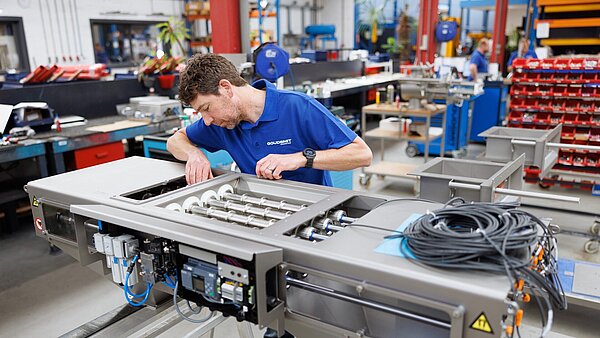
Assembly worker in the semiconductor industry
Working as an assembly worker
As an assembly worker, you assemble components to form a complete product or a part of a machine. In the semiconductor industry, you often work on highly precise and technical products. You’ll use tools, technical drawings and clear work instructions. It’s important that you work carefully, as every component must be in the right place.
What does an assembly worker do?
As an assembly worker, you assemble components and check that everything is fitted correctly. You often work step by step, following a set procedure. Your tasks may include, for example:
- Assembling and fitting components.
- Working with hand tools.
- Following technical drawings and work instructions.
- Measuring and checking components.
- Identifying errors or deviations.
- Ensuring the end product meets quality requirements.
Sometimes you’ll be working on small components. In other roles, you’ll be assembling larger modules or parts of machines.
Is assembly work right for you?
For this role, it’s important that you’re precise and enjoy working with your hands. You enjoy working step by step towards a clear result. Do you enjoy working with your hands? Do you enjoy working with precision? Then a role in assembly could be a good fit for you.
Can you start without experience?
You can join various assembly roles without prior experience in the semiconductor industry. Technical experience is an advantage, but isn’t required for every role. Do you have experience in production, assembly, metalwork, engineering or logistics, for example? If so, you may already possess skills that are well suited to the role. Sometimes, a short training course or programme can teach you how to read technical drawings, work with tools or operate in accordance with the semiconductor industry’s quality standards.
Career progression in assembly
As you gain more experience, you can move on to assembling increasingly complex products or components. For example, you can develop into an all-round assembly worker, technical fitter, quality control officer, specialist or team leader. You can also undertake further training in areas such as mechatronics, electrical engineering or mechanical engineering. This allows you to progress from assembly into increasingly technical roles.
Discover your opportunities
Wondering whether working as a CNC milling operator is right for you? Or would you like to know what other technical jobs are available in the semiconductor industry? During the free information session ‘Working in the Semiconductor Industry’, you’ll discover what opportunities are available and how we’ll help you, step by step, to choose, learn and get started.
Discover your future in the semiconductor industry.
Register for a free information session